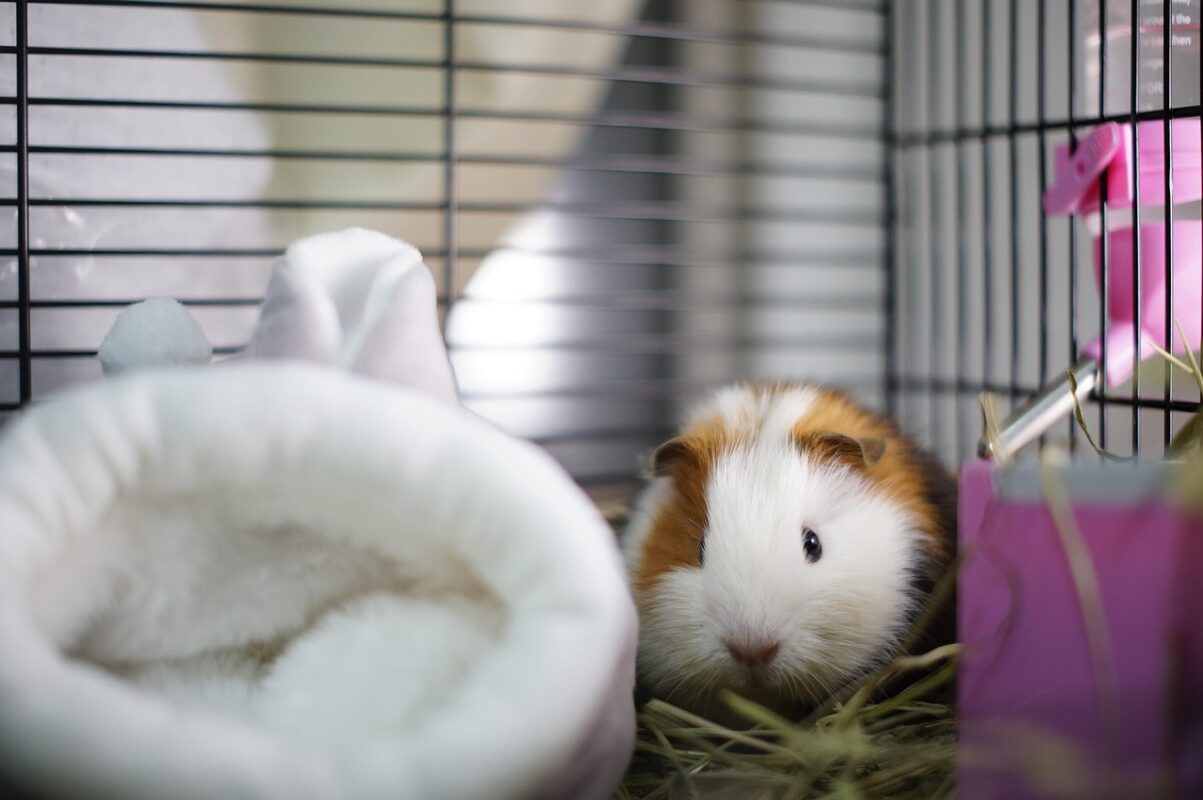
If you take one thing from a feed store, take this: for guinea pigs and rabbits, hay is not bedding and it is not a side dish. It is the diet. Everything else — pellets, vegetables, treats — is a supplement to it, and the proportions people usually assume are almost exactly backwards.
Why hay does a job nothing else does
The teeth of these species grow continuously throughout life. They are worn down by the specific grinding action of chewing long-fibre forage, which involves a wide lateral jaw movement that soft food does not produce.
An animal fed mainly pellets chews less, chews differently, and develops uneven molar wear. That leads to spurs, sharp points that cut the tongue and cheek, and it is one of the most common and most preventable veterinary problems in small herbivores.
Hay also provides the indigestible fibre that keeps the gut moving. In rabbits especially, a gut that stops moving is an emergency.
Types, and who gets which
Grass hays — timothy, orchard, meadow
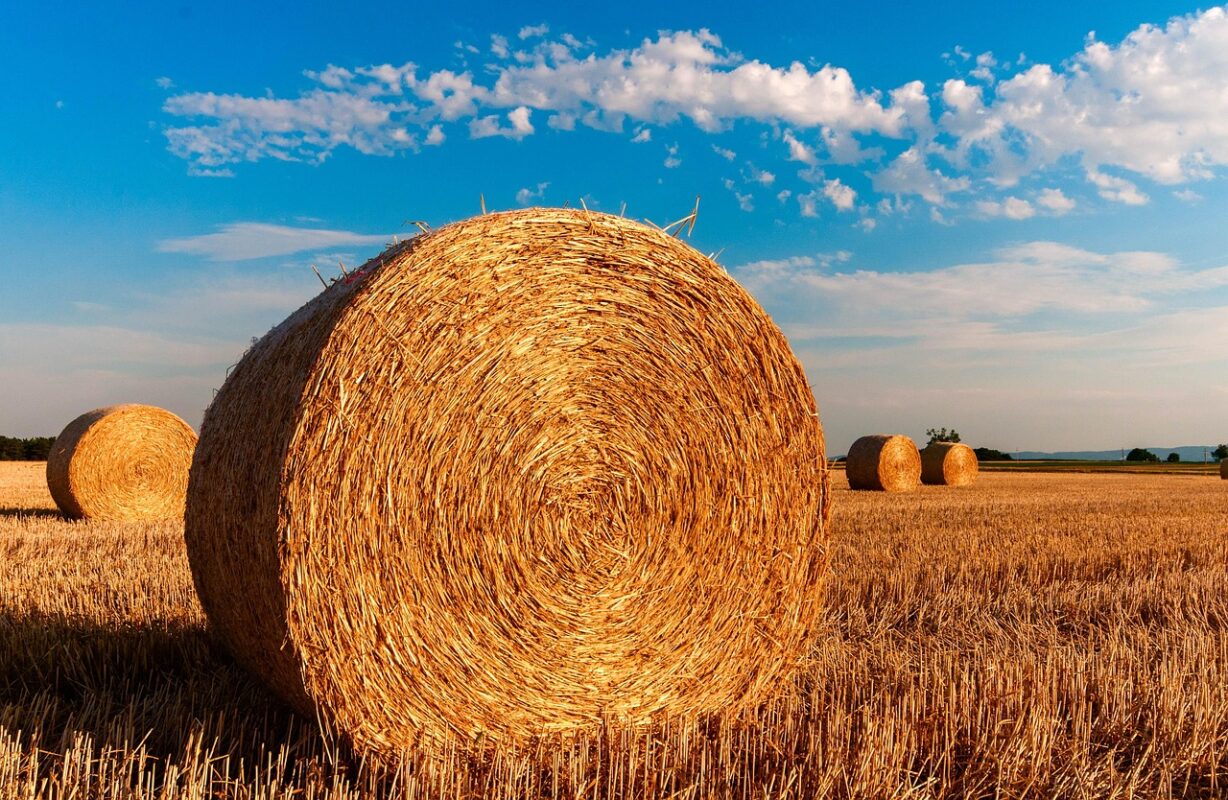
The staple for healthy adults. Available at all times, in unlimited quantity. Variety is useful: a mix of grass hays keeps interest up and covers slight differences in texture and nutrition.
Alfalfa
A legume, not a grass. High in calcium and protein, which is right for growing, pregnant or underweight animals and wrong for healthy adults, where the calcium load contributes to urinary problems.
Straw
Bedding, not food. It has very little nutritional value and should never be the forage source.
Quantity, in practical terms
A pile at least the size of the animal, refreshed every day, always available. If hay is ever finished before the next refill, there is not enough of it.
The common error is a small handful pushed into a rack as a token gesture alongside a full bowl of pellets. Reverse those proportions.
Pellets
A measured daily portion — for most adult guinea pigs and rabbits, a small fraction of a cup — provides balanced vitamins and minerals. Free-feeding pellets is where obesity, selective feeding and dental problems come from.
Choose plain uniform pellets rather than muesli-style mixes with seeds and coloured pieces, which encourage animals to eat the sugary parts and leave the rest.
Vitamin C for guinea pigs
Guinea pigs, like humans, cannot synthesise vitamin C and must get it from the diet. Deficiency causes lethargy, joint pain, poor coat and reduced immunity, and it is not rare.
Sources: a daily portion of fresh vegetables high in vitamin C — bell pepper is the practical favourite — and guinea-pig pellets fortified with a stabilised form. Note that vitamin C degrades in storage, so an old bag of pellets provides less than the label says. Do not add vitamin C drops to water: it degrades quickly, discourages drinking, and the dose is unknowable.
Fresh vegetables
A daily portion for guinea pigs, mostly leafy greens plus something vitamin-C rich. For rabbits, a variety of greens introduced gradually.
Introduce anything new one item at a time over several days. Sudden dietary changes cause digestive upset in animals whose gut flora is finely balanced.
Treats
Most commercial small-animal treats are sugar-based and, in yoghurt-drop form, contain dairy that these species cannot digest. A slice of vegetable or a small piece of fruit does the same job of a hand-fed reward without the problems.
Chew items are a different category and genuinely useful — untreated wood and rattan under chew and enrichment toys support the same dental work hay does.
Storing hay on the Gulf Coast
Humidity is the local enemy. Hay stored in a sealed plastic tub in a Texas summer will sweat and mould, and mouldy hay is a serious respiratory and digestive hazard.
Store in a breathable container — a cardboard box or a fabric bag — somewhere dry and off the floor, and buy in quantities you will use within a few weeks rather than in bulk that has to sit through the summer. Check by smell: good hay smells sweet and grassy, and anything musty goes out.
In the cage, keep hay in a rack rather than on the floor. It stays cleaner, drier and out of the toilet corner. Racks are under hay feeders and feeding.
What good output looks like
Droppings are the best daily indicator of a hay-based diet working: plentiful, round, uniform and dry. Small, sparse or misshapen droppings mean not enough fibre. A rabbit producing no droppings at all needs a vet the same day.
We are a feed store first — ask us about hay, see the FAQ, or browse the range.
From our shelves
Products in this store that relate to what is covered above:
Prices are in US dollars. Delivery timings are on our shipping policy page and the return and refund policy sets out the window if something is not right.
Key points
- Hay should be available at all times and make up the large majority of a guinea pig or rabbit diet.
- Continuous chewing on long-fibre hay is what wears molars evenly; pellets and treats do not do that job.
- Guinea pigs cannot make vitamin C and need a daily dietary source — this is not optional.
- Timothy or other grass hay for adults; alfalfa only for the young, pregnant or recovering.
- Pellets are a supplement, not a staple. A measured small portion daily is enough for most adults.
- Keep hay off the cage floor in a rack so it stays clean and dry, especially in humid weather.
Related reading